
The Indian Meteorological Department on Sunday stood vindicated over its forecast that Phailin will not be a 'super cyclone' as predicted by some international agencies and said its assessment was "more or less" accurate.

The Mumbai civic body and police have advised all people in the city and surrounding areas to stay indoors as much as possible.

This would be the second cyclonic storm in the Arabian Sea this year.

The administration is geared up for more showers as the India meteorological department has warned of heavy to very heavy rains with isolated extremely heavy rains in several districts of the state till Thursday morning.

The city's 24-hour Air Quality Index, recorded at 4 pm every day, stood at 418, up from 334 the previous day, and it may trigger stringent restrictions under the third stage of the graded response action plan to mitigate hazardous conditions.

The Reserve Bank of India on Friday revised upwards the GDP growth projection for the current fiscal to 7.2 per cent from 7 per cent on rising private consumption and revival of demand in rural areas. Unveiling the bi-monthly monetary policy, RBI Governor Shaktikanta Das said estimates released by the National Statistical Office (NSO) placed India's real gross domestic product (GDP) growth at 8.2 per cent in 2023-24. "During 2024-25 so far, domestic economic activity has maintained resilience," he said, adding that manufacturing activity continues to gain ground on the back of strengthening domestic demand.
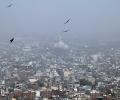
IMD Director General Mrutyunjay Mohapatra said that inducing artificial rain can only be attempted when there are clouds or moisture available.
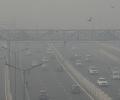
Delhi's 24-hour average air quality index (AQI) stood at 248 on Saturday.

The India meteorological department (IMD) on Wednesday evening issued a red alert for Mumbai and its neighbouring districts, predicting "extremely heavy rainfall".

Villpuram district in north Tamil Nadu continued to reel under unprecedented flooding on Monday following extremely heavy rainfall, virtually blocking access to villages and residential colonies as bridges and roads overflowed, inundating huge acreage of standing crops and leaving passengers stranded as rail and road traffic was hit.

The cyclone will make a landfall at around 9:00 pm to 10:00 pm on Thursday

At present, the Met department is often unable to provide exact information on the exact amount of rain over a localised area.

Increased production of pulses, oilseeds, and cereals will help boost domestic supplies and contribute to keeping inflation low in the coming months.

The Met Office has issued a yellow alert, warning of moderate rain which could cause more problems to the residents of Delhi.

The India Meteorological Department (IMD) predicted that cold wave to severe cold wave conditions are very likely to continue in northwest India over the next three days and abate thereafter.

Heavy rains lashed Mumbai and its suburbs on Thursday, causing waterlogging on roads in some areas that led to traffic snarls and also delayed local train operations.

The heat wave is likely to impact parts of Jammu and Kashmir, Himachal Pradesh, Uttarakhand, Punjab, Haryana, Delhi, Rajasthan, Madhya Pradesh, Jharkhand, Odisha and Gangetic West Bengal, the Met office said.

Heavy rains in Bengaluru on Wednesday night resulted in waterlogging, incidents of tree fall, damage to certain infrastructure and power outage in several parts.

So far, over 30 people have died across Northeastern states due to heavy rainfalls, floods and landslides, according to media reports.

The searing heat pushed the city's peak power demand to its highest for May, while the Delhi government directed the schools that have not closed for summer vacations to do so with immediate effect.
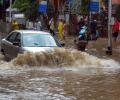
Disaster management authorities have warned about very heavy rainfall over the next 24 hours.

As heavy rains batter several parts of west and south India, the meteorological department on Friday said isolated extremely heavy falls are very likely over Konkan, Goa and central Maharashtra in the next two days.

The IMD issued a 'red alert' for Pune district and asked people to take precautions.
"The monsoon has reached Ratnagiri over the country's west coast. It will remain there for the week before moving on. This year's monsoon will be 96 per cent normal, with an error margin of 5 per cent," Indian Meteorological Department director B P Yadav said.

Monsoons have had limited effect on market returns for a given year, report Sachin Mampatta and Sundar Sethuraman.

Conditions were becoming favourable for further advance of the southwest monsoon over some more parts of the south peninsula and east India and adjoining areas between June 18 and 21.

After making landfall near Puducherry on November 30, Cyclone Fengal weakened on Sunday, but torrential downpour under its influence paralysed the union territory, with the Army stepping in to evacuate stranded persons in inundated streets.

Taking to Twitter, the Delhi Traffic Police asked commuters to take the alternate route.

As India's electricity demand soars, the power ministry on Tuesday reviewed the power supply situation to ensure 'zero load shedding' during the summer months. The ministry has drafted plans ranging from delaying planned maintenance of thermal power stations to mandatory operations of imported coal-based and gas-based stations till September. In a series of meetings with industry stakeholders, Union Minister for Power, New, and Renewable Energy R K Singh emphasised the importance of adequate planning to avoid situations where one state has surplus power while another state faces shortages.

India recorded 125 extremely heavy rainfall events during September and October of 2021, the highest in five years, owing to late withdrawal of the southwest monsoon and higher-than-normal low-pressure systems, India Meteorological Department (IMD) said on Tuesday.

Even as Mumbaikars got some respite from the downpour on Friday morning, the India meteorological department has issued a red alert for the city and its suburbs warning that very heavy to extremely heavy rainfall is likely at isolated places during the day, the civic officials said.

This is for the second time this month that Mumbai has recorded the highest maximum temperature in the country.
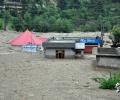
As the weather improved in parts of north India, which was pummelled by heavy rains for days, authorities on Wednesday worked on a war footing to rescue stranded tourists, restore vehicular traffic on arterial roads and prevent floodwaters from entering new areas.

IMD Director General Mrutunjay Mohapatra said the department's modelling indicate formation of a cyclonic storm around May 9, but its movement and intensification may be determined after the low pressure area actually forms on May 7.

https://www.rediff.com/business/report/quality-control-orders-what-does-this-mean-for-domestic-industry/20240425.htm
Cyclone Phyan might not hit Mumbai directly, though the metropolis will feel its impact due to extremely heavy rainfall, Meteorological Department officials said on Wednesday.'The cyclone may not directly hit Mumbai, but the impact of the severe weather has already started in the city. In the afternoon perhaps, it will be more severe. Disturbed weather is expected with heavy rains, storms and the ea will become very rough," said a Meteorological Department official.

The weather office has forecast intense spells of rain at isolated places in Nainital, Champawat, Pithoragarh, Bageshwar, Dehradun, Tehri and Pauri districts on Sunday.

An earthquake measuring 4.9 on the Richter scale hit Pakistan-occupied-Gilgit late on Tuesday night and resultant mild tremors were felt in Doda and Kishtwar districts of Jammu and Kashmir.

Several areas of Tamil Nadu remain inundated after hours of heavy to moderate rainfall in the region. Water entered houses and markets in the low-lying residential areas of Erode district due to heavy rainfall throughout the night.
